

Bill Of Rights Day - Sept 25, 1789
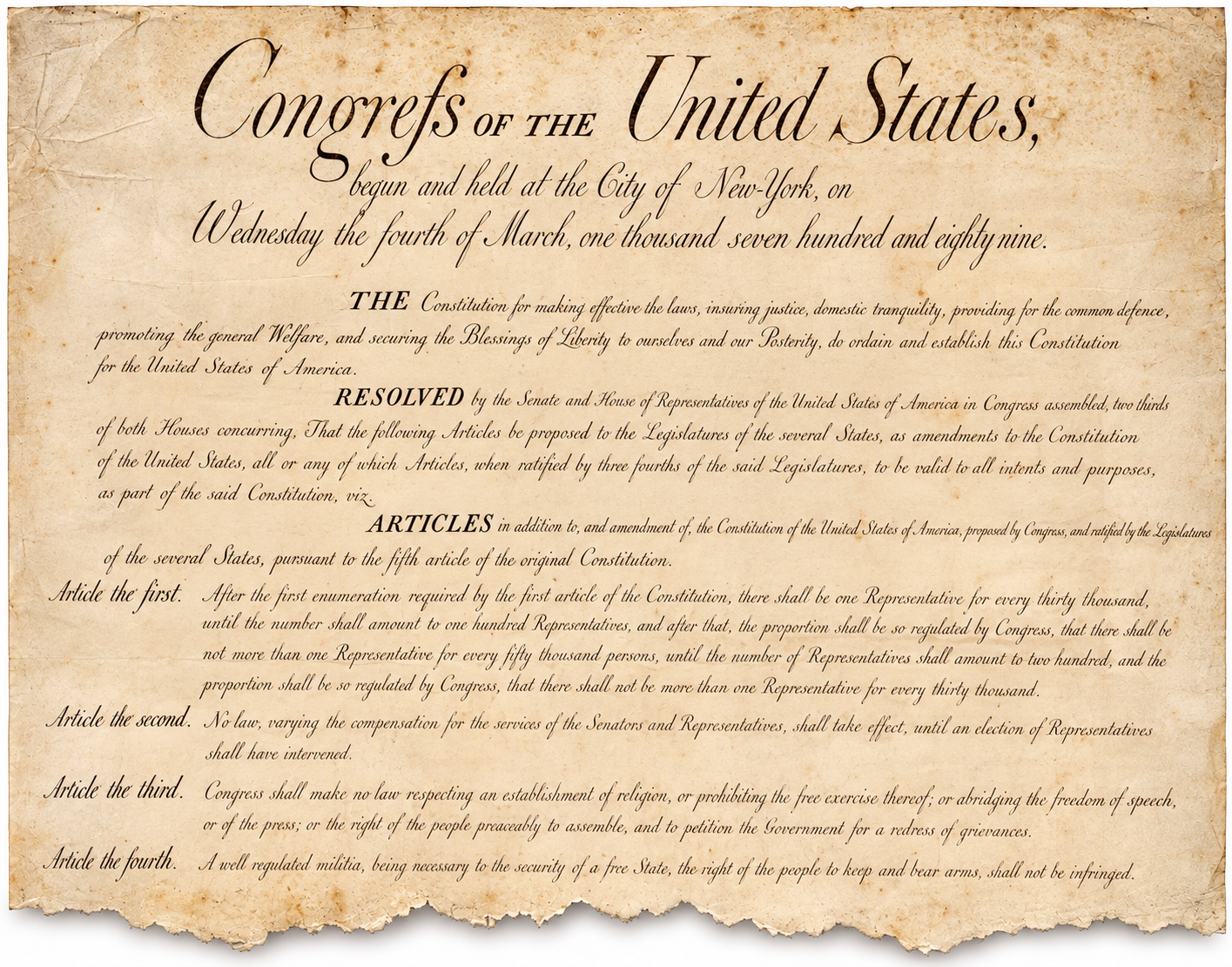
On September 25, 1789, the Congress adopted 12 Constitutional amendments. The amendments would be sent to the 13 states for their ratification. It took until December 15, 1791, for 10 of those amendments to be ratified by enough states to become embedded in the Constitution. These ten became known as the “Bill of Rights.”
We’ve had the privilege of growing up with these rights already in place. They’re well known by most people, even if they are misstated or misunderstood. The First Amendment freedoms - of religion, of speech, of the press, of the right to assemble and petition the government - these are brought up time and time again. Pundits, protestors, reporters, faith practitioners, all lean on the words of that First Amendment to defend their positions, even as those position oppose one another.
Many decades ago (when I was an 18-year-old, so sometime in the last century), I wrote an essay on the Freedom of Speech. Central to that essay was the work of Supreme Court Justice Oliver Wendell Holmes, Jr., who had promulgated the principle that “The most stringent protection of free speech would not protect a man in falsely shouting fire in a theatre and causing a panic”. Holmes held that government had a right to limit our freedom of speech if that speech risked creating “a clear and present danger”.
Yes, earlier, Holmes had also written that “It is better for those who have unquestioned and almost unlimited power in their hands to err on the side of freedom.”
To err on the side of freedom is a guiding principle for all of us - and especially for those who are entrusted with power and authority over us. We need to remember this principle when we encounter festering totalitarianism claiming that “national security” or “public safety” or “law and order” overrides our rights and our freedom. They do not.
The Declaration of Independence expressed our belief in unalienable rights, and in the duty of government to protect those rights.
The Constitution established and empowered the government, and the Bill of Rights constrained those government powers.
Our Democratic Creed is our modern reminder of these foundational principles - our unalienable rights, our duty as government, and the importance of freedom.
